
Attic Mold Removal in Gettysburg, PA
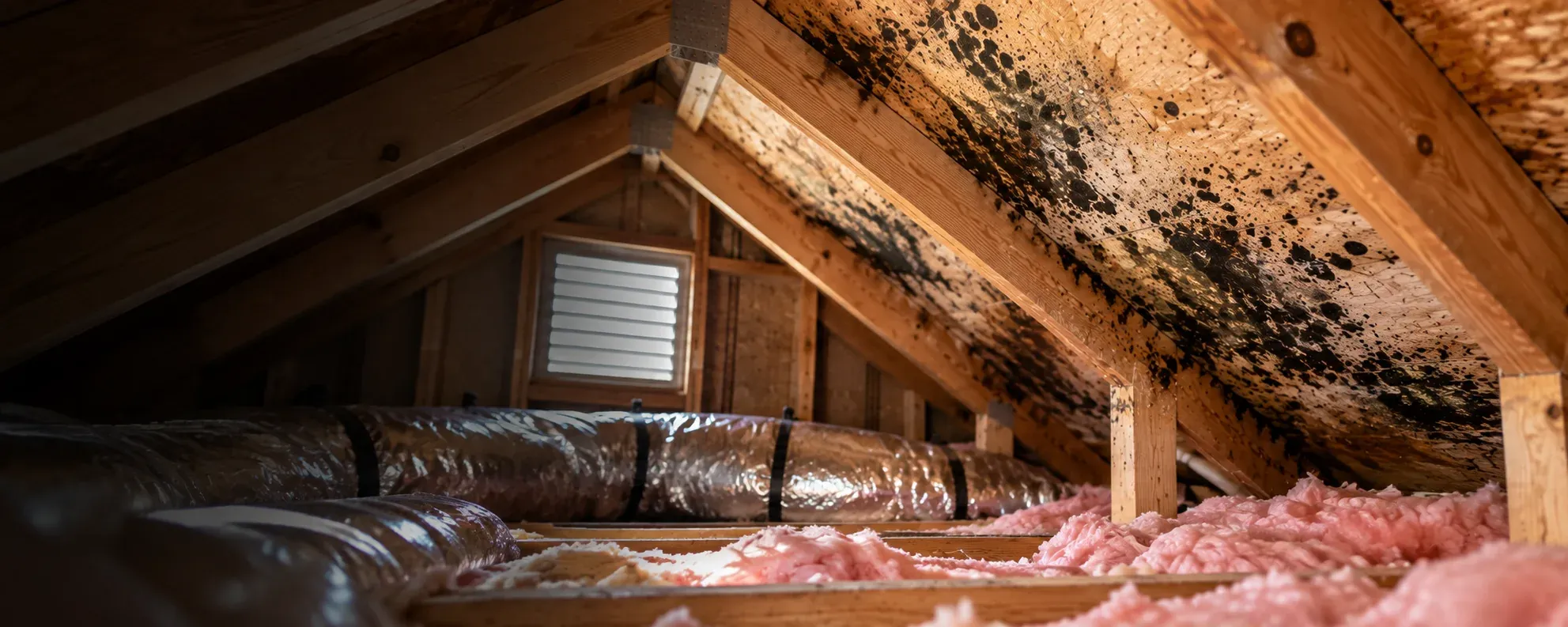
The home inspector stuck a head through the hatch and saw black staining across the underside of the roof. Now the sale's on hold. Nine times out of ten the roof is fine. Here's what's actually going on.
Where attic moisture comes from
Almost every attic mold job traces back to one of four things, and only one of them is the roof.
Bath fans vented into the attic. The most common cause by a mile. The fan pulls steamy air out of the bathroom and dumps it right onto the insulation, where it rises and condenses on the sheathing. Sometimes the duct was never connected. Sometimes it fell off. Sometimes it ends at a soffit vent that pushes the air back in. A lot of the 1960s through 90s homes around here were built this way.
Not enough ventilation. Blocked soffit vents, insulation stuffed into the eaves, no ridge vent. Moist air gets in and can’t get out. Older homes that were tightened up with new windows and insulation often got worse here, because the attic lost its old drafty escape route.
Air leaks from the house. Around the attic hatch, recessed lights, plumbing stacks, and the top of interior walls. Every winter day, warm humid house air leaks into the cold attic and condenses on the wood.
Ice dams and roof leaks. Snow melts over the warm part of the roof, refreezes at the cold eave, and backs water up under the shingles. This is the one that actually involves the roof, and it usually shows up as staining near the eaves rather than across the whole underside.
Why it’s mostly on the north side
Take a look next time you’re up there. The staining is heaviest on the north-facing sheathing and lightest on the south. The north side gets no sun, stays coldest, and that’s where the condensation happens first. Once you see the pattern, you know it’s a moisture-from-inside problem before you’ve touched a meter.
What the job involves
An attic is a tight, hot, awkward place to work, which is most of what drives the cost. Otherwise it’s the same S520 process.
Inspection. We check the sheathing with a meter, trace every bath fan duct to where it actually ends, count vents, look for daylight at the soffits, and check the insulation depth and the air-sealing at the hatch and penetrations.
Fix the moisture. Bath fan ducted through the roof or gable with an insulated duct. Soffit vents cleared. Ridge or gable ventilation added if there’s none. Hatch weatherstripped. Without this step, the sheathing gets stained again in a winter or two.
Containment. The hatch gets sealed off from the house with plastic and a HEPA scrubber runs during the work.
Clean the wood. Staining on sheathing and rafters comes off by HEPA vacuuming, wire brushing, sanding, or media blasting, depending on how deep it goes. Dry ice or soda blasting is what we use for heavy, widespread staining.
Treat. An antimicrobial and, where it makes sense, an encapsulant coating on the cleaned wood. Cleaned first, always.
Insulation. If it’s wet or contaminated, it comes out and gets replaced.
What it costs
Attic mold jobs around here run about $1,000 to $4,000. Long-term roof leaks with rotted sheathing can push toward $7,000, and replacing a whole attic’s worth of insulation adds to that. What moves the number: how much sheathing is affected, whether blasting is needed, how many bath fans need rerouting, whether ventilation has to be added, and whether insulation comes out. The real number comes after we’ve been up there.
The real estate version of this call
A lot of attic mold calls come from a home inspection. The buyer’s inspector flagged staining, the buyer wants it gone before closing, and the seller wants it done yesterday. We can usually get up there within a few days, give you a written scope, and provide documentation both sides can use. If the sale needs an independent clearance test afterward, we’ll schedule around it.
If the staining is near the eaves and the roof is the suspect, get a roofer’s opinion on the roof before you spend money on the wood. And if you’re not sure what you’re looking at, start with a mold inspection. When the problem is a leak that got into the ceilings below, water damage and structural drying is the first call. The rest of what we do is on the home page.
Frequently Asked Questions About Attic Mold
Does Attic Mold Affect The Air in The House?
Less than a basement does, because most attics are sealed off from the living space and air moves up, not down. It's still a moisture problem eating your roof sheathing, and it's a problem for anyone who goes up there. It also stops home sales cold.
Do I Need a New Roof?
Usually not. Most attic mold comes from moisture inside the attic, not water coming through the roof. If the sheathing is soft or delaminated, that's a roofer's call, and we'll tell you if we see it.
Why is it Only on The North Side?
The north-facing sheathing stays coldest. Warm, wet air from the house rises, hits that cold wood, and condenses there first. That pattern is a ventilation and air-sealing problem, and it's the most common one we see.
Can You Just Spray The Sheathing?
Spraying without cleaning leaves the growth in place under a coating. We clean the wood, treat it, and fix the moisture source. An encapsulant on cleaned wood is fine as a last step. On dirty wood it's paint over a problem.
Find the Water. Remove the Mold. Get Your Home Back.
(267) 828-9088Request an inspection- Started in Gettysburg in 2012
- IICRC AMRT and WRT certified
- 1-year warranty on every job
- Chuck is on the job, not just the phone