
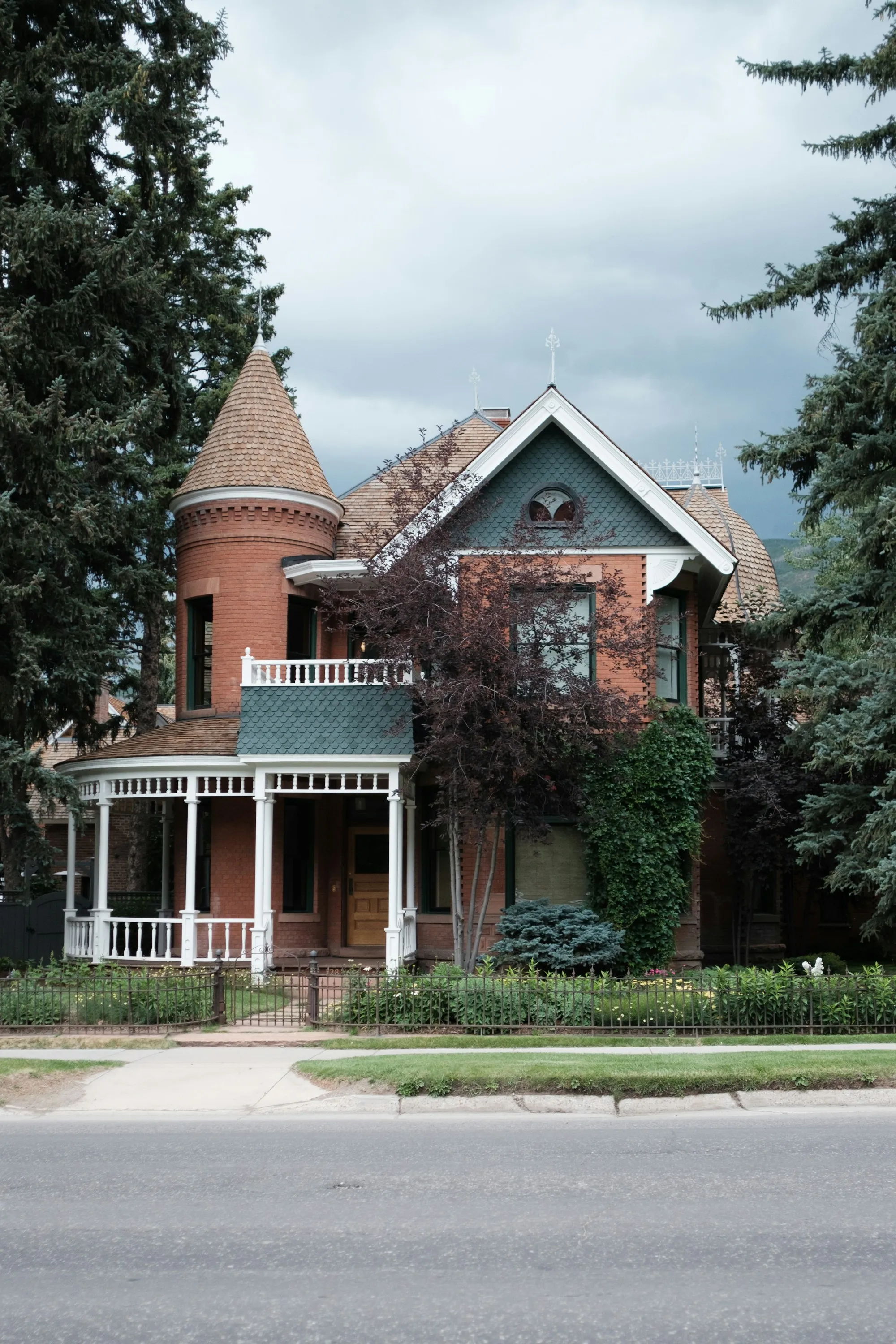
New Oxford mold remediation for a town of brick and plaster
New Oxford is a little over half a square mile of Victorian and earlier brick homes wrapped around Center Square, laid out in 1792 on the road between Gettysburg and York. Beautiful houses. Damp basements.
What New Oxford basements have in common
Walk the blocks off Center Square and you’re looking at homes from the 1800s and early 1900s, brick on the outside, plaster and lath inside, and stone or early block underneath. That foundation is the reason we’re on this page.
Stone doesn’t stop ground moisture. It wicks it. On a humid July afternoon the inside face of the wall sits at ground temperature, the air hits it, and it sweats. Relative humidity in the cellar climbs past 60%, and spores that are in every house in Pennsylvania start growing on the joists, the stair stringers, and whatever’s stored down there. That’s the musty smell that shows up every summer and fades every winter.
Two things make it worse in a town this old. Plaster over stone in stairwells and cellar walls holds water against the masonry. And a lot of these houses have had a bathroom added upstairs at some point, with a fan that vents into the attic because there was nowhere else to send it.
The creek and the water table
The Conewago Creek runs near town, and low-lying lots and older drainage mean some New Oxford basements take on water in heavy rain whether or not there’s a sump. When there’s standing water, the first two days decide whether this is a drying job or a remediation job. The water damage and structural drying page covers what to do before we get there.
How we approach an old house here
We don’t open a wall until we know why it’s wet. In New Oxford the order is usually:
- Foundation and grading. Where does the roof water go, and does the sidewalk grade push it toward the house?
- Humidity. Read in the cellar, on the first floor, and in the attic. They run differently in a house this age.
- Plaster and trim. A pin meter tells us whether the plaster is wet from behind or just stained from years ago.
- The attic. Insulation added in the 70s and 80s without ventilation, plus a bath fan ending on top of it, is a common combination in these homes.
Then it’s the standard job: containment, negative air, remove porous material with growth, HEPA-clean and treat the stone and framing, dry to standard, verify, and patch. Step by step on the mold remediation page. The stone-cellar specifics, including why waterproofing paint on the inside of these walls can backfire, are on basement and crawl space mold.
Home sales in an antiques town
New Oxford gets a steady stream of buyers who fall for a Victorian and then read the inspection report. Staining in the cellar or on the attic sheathing stalls a lot of these deals. We can inspect within a few days, give both sides a written scope, and document the work so it doesn’t come up again at the next sale. If the report only says “possible mold” and nobody’s sure, a mold inspection and air quality test answers it. Sheathing staining is usually a fan-and-ventilation fix, explained on the attic mold page.
The company on the other end of US 30 is Gettysburg’s locally owned mold remediation shop, a 20-minute drive west.
Questions we hear a lot
Our house is in the historic district. Will remediation change anything on the outside?
Almost never. Mold work happens inside: basement, walls, attic. The one outside item that sometimes comes up is downspout extensions or regrading to move water away from the foundation, which doesn't touch the facade. If a repair would affect the exterior, we'll tell you before it comes up with the borough.
The plaster in the basement stairwell is crumbling and dark. Is that mold?
Could be both. Old lime plaster over stone holds moisture and eventually fails, and the dark staining on it is often growth. We meter it, tell you which it is, and if the plaster has to come off we cut a clean line so the repair looks right.
How long does a typical New Oxford basement job take?
Two to five days for most, plus drying time, which we don't rush. A single-wall job in a stone cellar can be done in a couple of days. A finished basement with growth on several walls takes the full week.
- Started in Gettysburg in 2012
- IICRC AMRT and WRT certified
- 1-year warranty on every job
- Chuck is on the job, not just the phone